01 · Technical pressure
Legacy is slowing velocity.
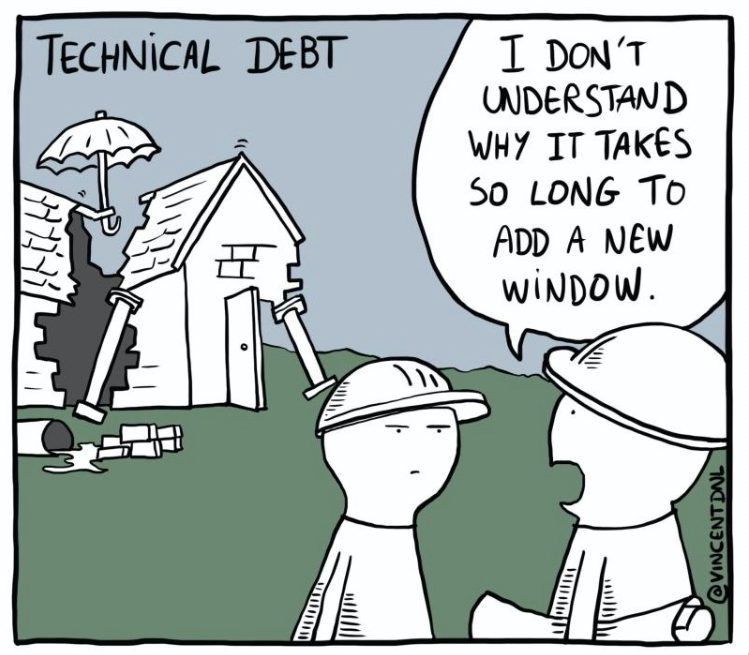
The current stack creates capacity constraints, maintenance risk and a growing gap with competitors.
Replace the current learner platform through gradual migration, while continuing to deliver value today and launching a modular blended-solutions platform for tomorrow.
✨: Used AI for removing Dunglish in this presentation
How do we mitigate the risks of a legacy learner platform to secure market share in 2028, while optimizing resources without compromising the impact of our teacher platform?
The current stack creates capacity constraints, maintenance risk and a growing gap with competitors.
The 2028 curriculum shift creates a time-bound market opportunity — while teacher experience remains the primary investment priority.
✨ GPT 5.6 Sol: Creating fancy titles and icons.
Each option solves a different part of the problem. Select a card to compare its logic and trade-offs.
High budget pressure and speed favor Legacy Stabilization.
Fix the current stack and focus only on the current platform. Minimize replacement costs, maximize existing technology.
✨ GPT 5.6 Sol: Creating fancy titles and icons. - Assumption: We cannot re-use features build for other countries Infinitas Learning is active in.
Rather than placing one irreversible bet, the strategy protects current value while creating fast feedback loops for the future platform.
Bridge & Build is the recommended path because it balances commercial urgency, technical renewal and controlled migration better than the alternatives.
Filter the assumptions by innovation-risk type. Each one has a concrete validation route.
Validate with IT, a technical-risk review, and explicit time-and-cost estimates.
Build a thin MVP and compare partner, buy and build scenarios against the proposed path.
Analyse churn and usage, apply Kano research and benchmark competitor progress.
Validate through UX research, beta cohorts, migration pilots and controlled A/B tests.
Run continuous CX surveys and qualitative research to distinguish pain from noise.
1] AI - Gemini Flash: School Year’25–26 (Piloting): Voluntary early adoption; publishers run pilot tests. → SY’26–27 (K to Grade 3 - Core): New goals mandatory for Dutch, Math, and Science & Tech from Kindergarten to Grade 3. → SY’27–28 (K to Grade 3 - All): All remaining subjects mandatory for Kindergarten to Grade 3. → SY’28–29 (Grades 4–6 - Tipping Point): Mandatory for Grades 4 to 6. This is the critical commercial milestone, triggering a massive, system-wide procurement cycle for new blended learning methods. - Assumption: Hypothesis about other countries (e.g. % revenue per country) are out of scope.
Capacity is deliberately split between protecting the current experience, building the future platform and meeting Belgium’s curriculum needs.
Team size can be adapted per quarter, depending on needs
Focus on current platform (maintenance, uptime and new features), facing teachers.
Focus on current platform (maintenance, uptime and new features), facing learners.
Focus on technical platform (architecture, API, integrations, migration). Migrate schools, teachers, and students from the old systems to the new platform without loss of brand trust.
Ensuring that all content is 100% ready for the new Belgian attainment targets of 2028.
S&P Global: Revenue distribution Infinitas Learning: the Netherlands (Noordhoff), 40%; Portugal (LeYa), 19%; Belgium (Plantyn), 16%; Poland (WSiP), 13%; Sweden (Liber), 7%; and home-learning platforms (Futurewhiz/Squla), 5%. https://www.spglobal.com/ratings/en/regulatory/article/-/view/type/HTML/id/3453112
Main Objective: Accelerate our international platform modernization while fully securing the 2028 Belgian curriculum market opportunity.
Team size can be adapted per quarter, depending on needs
The roadmap turns a large transformation into four decision gates, aligned with the Belgian curriculum window.
Quantify legacy risk, define MVP scope, test buy/partner/build and baseline customer needs.
Stand up core architecture, APIs, migration tooling and the first validated blended journeys.
Migrate selected cohorts, prove trust and usage, and iterate against curriculum readiness.
Launch a competitive, curriculum-compliant blended solution and accelerate migration.
Bridge & Build balances platform renewal with commercial timing: protect the current customer experience, validate the future platform in steps, and stay ready for the Belgian 2028 opportunity.
Gradual migration avoids a cliff edge while still creating a modern modular foundation.
Keep teacher and learner value moving, while core platform teams reduce technical debt.
Use pilots, validation and blended-solutions readiness to meet the Belgian curriculum shift.
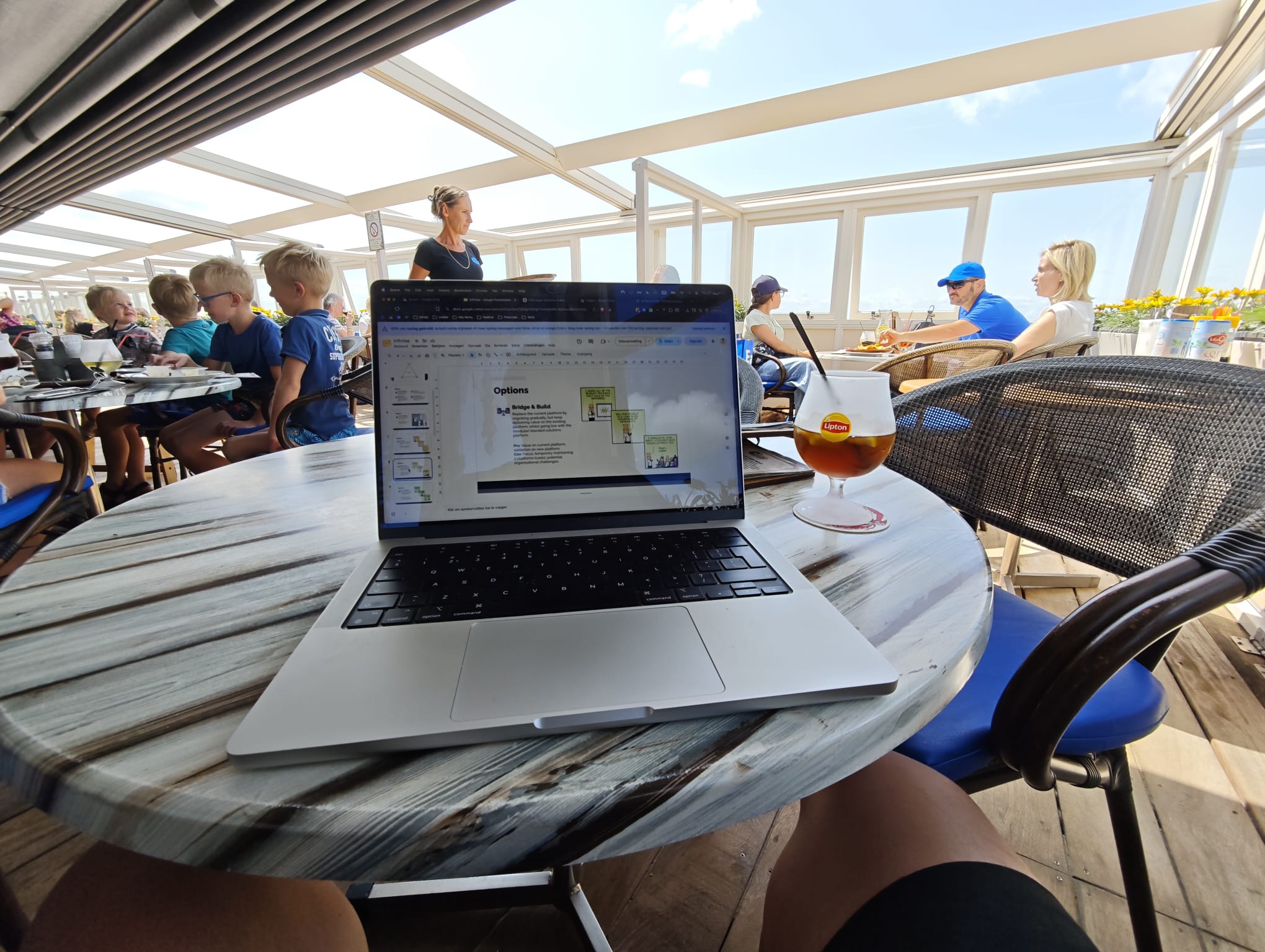
Made with ♥️ from Zoutelande, Zeeland